

tW: Is Your RQ Type Right?
Descriptive, comparative, explanatory, predictive, each one needs different evidence, structure, and claims.
The Research Question Taxonomy: Match Logic to Aim
Does your Introduction write checks your methodology can’t cash? This edition of thesify weekly focuses on Research Question Taxonomy, a logic check to secure the core argument of your Introduction. You’ll learn how to distinguish between Descriptive, Comparative, Explanatory, and Predictive questions, and build the specific “gap-to-aim” bridge that each type demands. This week’s blog walks you through a practical alignment check, helping you ensure you don’t promise a causal mechanism when your design can only support a description
This Week’s thesify Feature to Try: Suggested Topics
Suggested Topics generates reader-facing questions from your manuscript, plus a short note indicating whether your draft already answers the question or still needs more to fully answer it. That makes it a useful checkpoint for two things:
What your draft is currently signaling as the main research question
Whether your Introduction section is setting up an aim your paper can actually deliver.
How to Use Suggested Topics
Step 1: Generate Suggested Topics
Open the Feedback panel on the right.
Scroll to Additional Feedback.
Select Suggested Topics from the dropdown.
Open Feedback, scroll to Additional Feedback, then select Suggested Topics.
Step 2: Use “Answered vs Not Yet” to decide what to do next
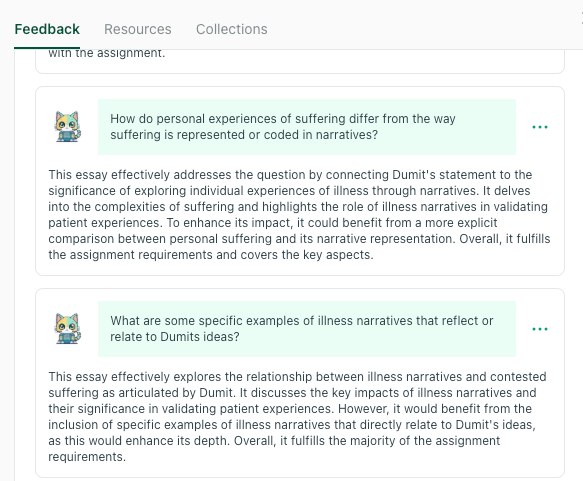
When a question is answered, it is a validation signal. Your draft contains enough material to satisfy that question, so you can treat it as a candidate for your “primary RQ type” and check that your gap and aim clearly set it up.
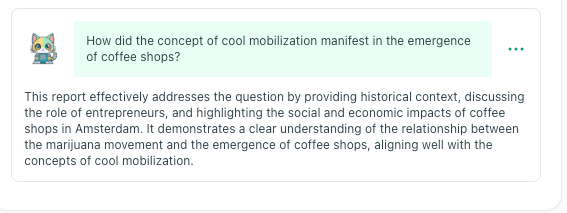
An “answered” question confirms what your draft is already delivering.
When a question is not yet answered (or only partially), it is an expectation signal. A reader could reasonably look for this, but your draft is missing a component (often specific examples, a comparison, or a clearer implication). You then choose: add what is missing, narrow the aim, or park it for limitations or future work.
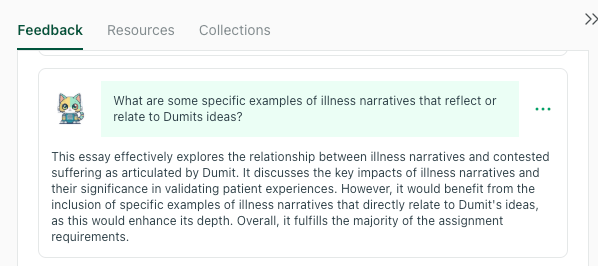
A “not yet” signal shows what your reader expects, and what the draft still needs to fully deliver.
Step 3: Classify the questions, then tighten your gap-to-aim logic
Label the top 2 to 3 questions as descriptive, comparative, explanatory, or predictive. If the unanswered questions skew toward a different type than your stated aim, that mismatch is usually why the Introduction feels like it is overpromising.
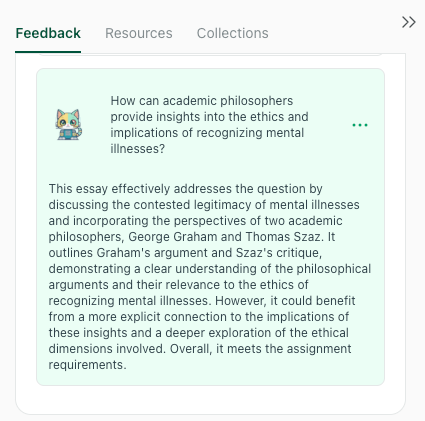
Partial answers often point to a gap-to-aim bridge that needs clearer implications or tighter scope.
Your Weekly Tips: Match Your Aim to Your Question Type
This screenshot shows one research question spawning multiple “directions”, which is exactly the point of the taxonomy: if you do not decide what kind of question you are answering, your aim can drift across types.
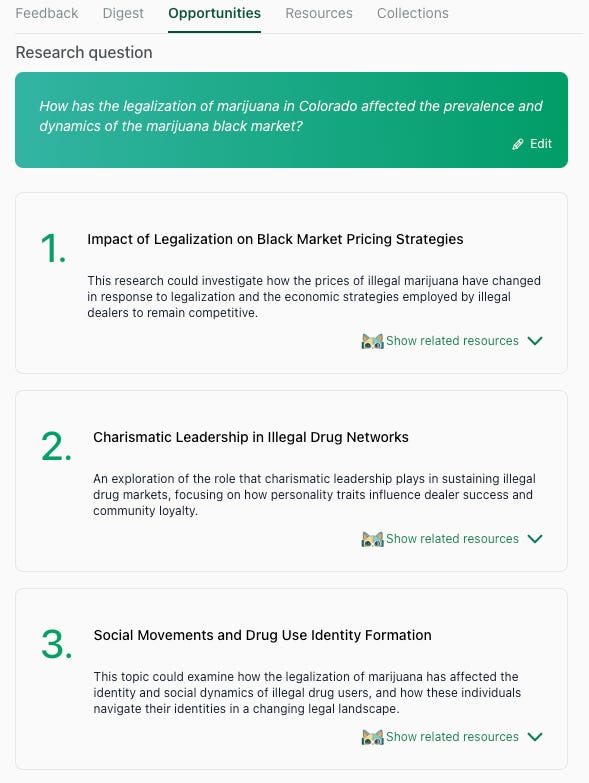
One research question can generate different directions, comparative, explanatory, descriptive. Pick the type you are answering, then match your aim to it.
Every research question creates a specific logic “contract” between your Gap and your Aim. If you misclassify your question, you might break that contract before you even reach the Methods section. Use these four categories to audit your current draft:
1. The Descriptive Question (”What is X?”)
You are mapping unknown territory. Your gap is that a phenomenon exists but is undocumented in a specific context.
The Trap: Don’t promise to explain why it happens; a descriptive design can only validly claim what it looks like.
2. The Comparative Question (”Is X different from Y?”)
You are adjudicating between alternatives. Your gap is that Option A and Option B exist, but we don’t know which performs better under specific constraints.
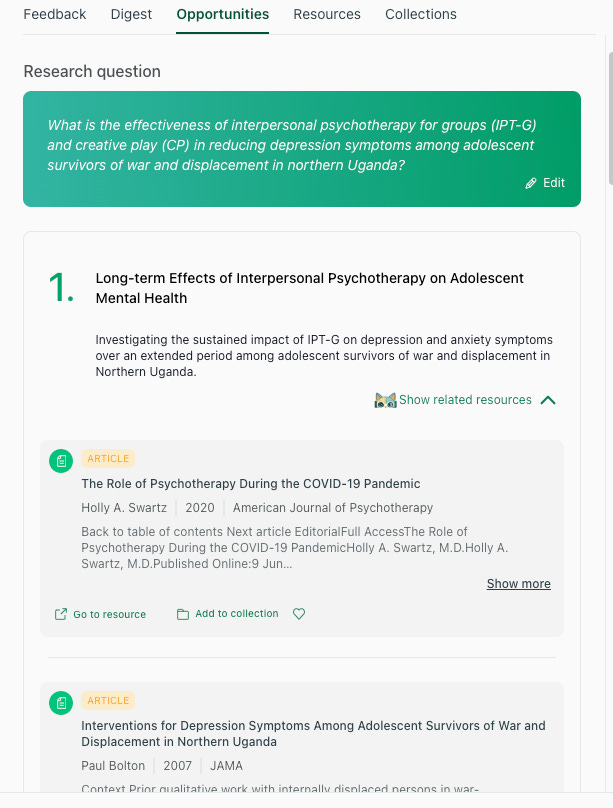
Effectiveness questions usually imply a comparison, your aim should state what is compared, in whom, and how success is measured.
The Trap: Avoid “strawman” comparisons; you must fairly evaluate the trade-offs of both sides rather than just seeking to prove one is superior.
3. The Explanatory Question (”Why does X happen?”)
You are hunting for a mechanism. Your gap is that X is correlated with Y, but the underlying causal pathway remains a “black box”.
The Trap: Ensure your aim matches this ambition—a cross-sectional survey cannot support a causal mechanism claim.
4. The Predictive Question (”Will X happen?”)
You are forecasting future states. Your gap is that current models cannot accurately anticipate an outcome in a specific population.
The Trap: Precision matters more than explanation here; you don’t always need to know why the model works, just that it does predict accurately in your target setting.
This Week at thesify: Thanks for stopping by AMLD!
thesify spent the last few days at Applied Machine Learning Days (AMLD) at EPFL in Lausanne. A huge thank you to everyone who visited Booth #B8 to chat about research integrity, AI, and the pain of the blank page. It was incredible to see what you are working on.
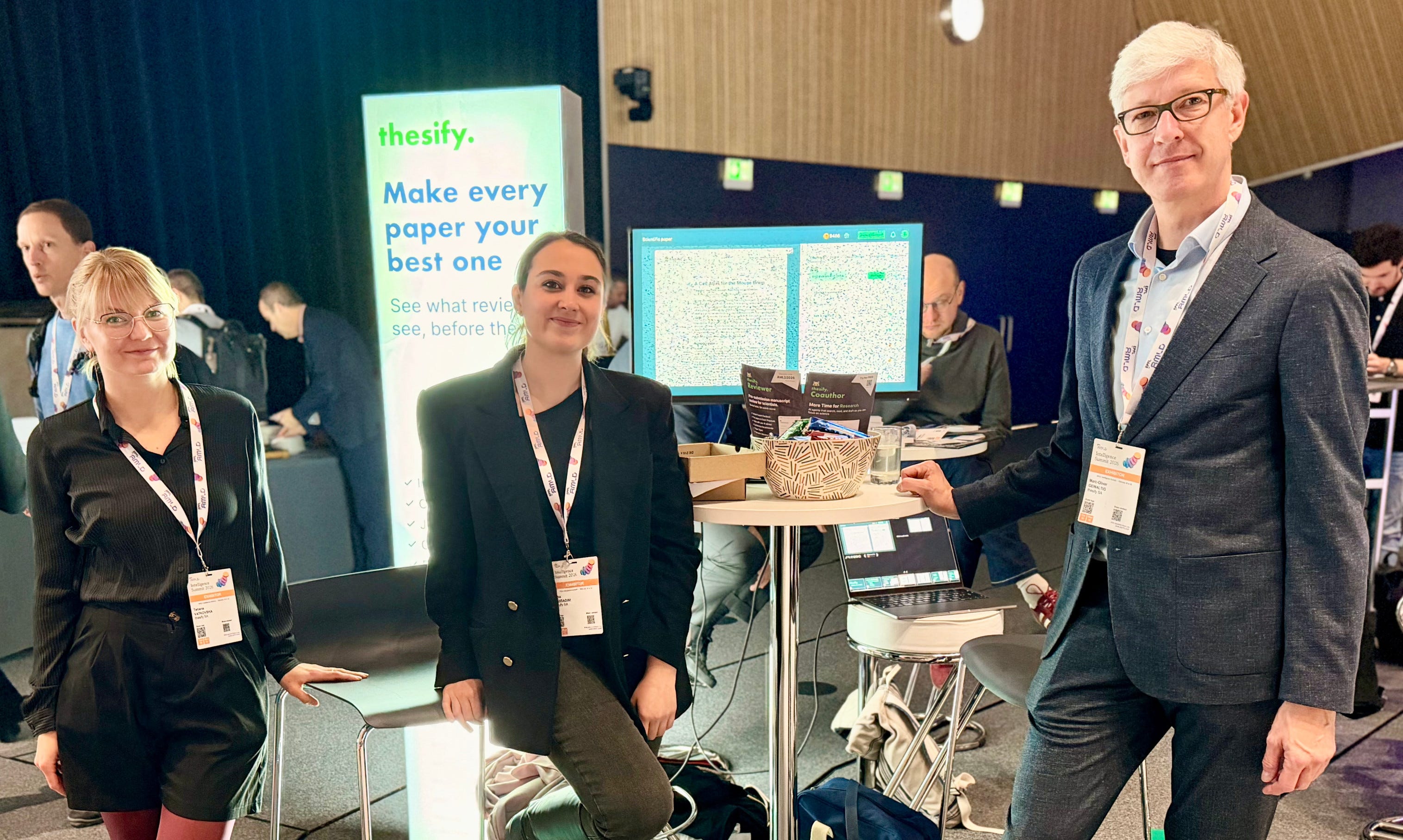
Missed us in Lausanne? You can still shape what we build next. We are running a short survey to understand which writing bottlenecks cost you the most time. It takes about 5 minutes, and your input goes directly to our product roadmap.
This Week’s Blog: Scientific Paper Introduction, Fix Gap-Aim Alignment
Introductions often go wrong at the handoff from “what’s missing” to “what we do,” leaving the aim statement floating, or overpromising what the design can support. This week’s post shows you how to tighten gap–aim alignment with a quick logic check, plus copy-ready sentence stems for the final paragraph so your rationale sets up the exact study you actually ran.
Related Resources
thesify Weekly Newsletter Archive: a back catalog you can actually use. If you have 15 minutes and one stubborn problem in your draft, the archive is built for that moment. Each edition focuses on a single, high-impact writing move, gives you a simple diagnostic to spot the issue fast, then walks you through the minimal fix that improves clarity and reviewer confidence. Browse by the problem you’re facing and pull one tactic at a time as you revise.
Discussion Section Feedback: Stress-Test Your Draft: Reviewers frequently reject manuscripts here not because the data is flawed, but because the interpretation disconnects from the evidence. We frequently see drafts that fall into one of two extremes: the “safe” draft that merely re-hashes results without synthesis, or the “overconfident” draft that claims causality where the design only supports association. Use a reviewer-style checklist to write your Discussion: avoid overclaiming, link to results, write design-specific limitations, and plan future work.
Improving Your Methods Section with thesify Feedback: When you run methods section feedback in thesify, the output is not a generic writing critique. It is a rubric-based review of methodological reporting, organised around the kinds of details reviewers routinely look for when assessing whether a study can be evaluated, interpreted, and (where relevant) reproduced. Use thesify methods section feedback to spot missing sampling details, coding steps, and tool settings. Add reviewer-ready detail, then re-run section checks.
Drafting a Clear, Testable Research Hypothesis: In this guide you will learn what a research hypothesis is and is not, explore the main types of hypotheses, follow a step‑by‑step method for crafting your own, and see how to apply these ideas in examples drawn from developmental psychology, sociological case studies of rampage violence and a medical study on unintentional ingestions. Throughout the article you will find links to thesify’s blog posts on literature reviews, using theory and structuring scientific papers to help you refine your question, draft your hypothesis and place it effectively within your introduction.
Try thesify on Your Hypothesis
Upgrade today, upload a page of your introduction or research design to thesify and generate a Feedback Report PDF. This report highlights areas where your hypothesis could be clearer or more testable. Then, use Chat with Theo to ask follow‑up questions and refine your wording.
Need more insights? Visit our full blog archive or newsletter archive for expert advice on academic writing.
Until next time,
The thesify Team